Skip to content
AARON BESPOKEMontréal
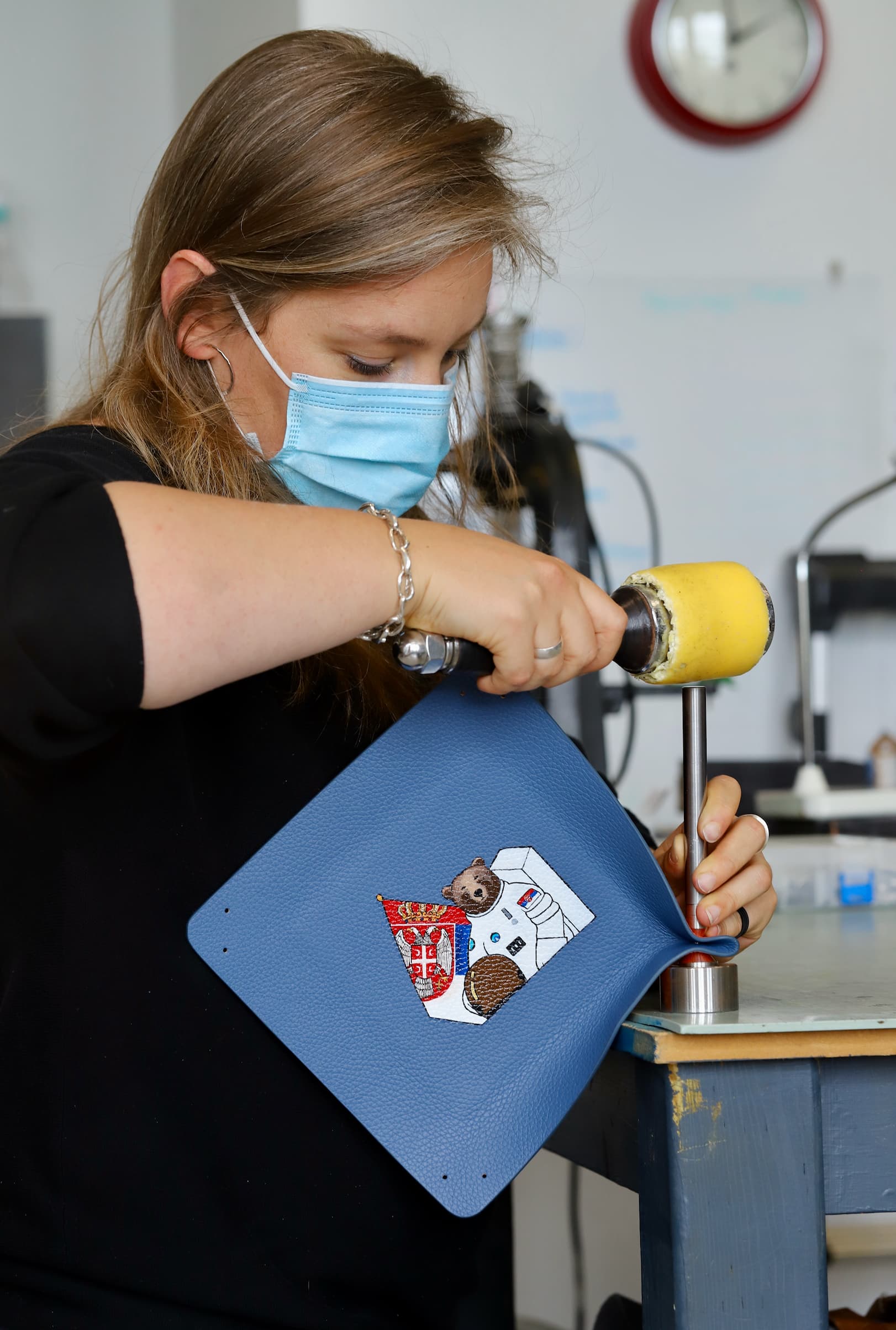
Aaron Pimentel at the workbench, holding a finished leather piece.
Excellence in the making

The anatomy of a strap

A strap looks simple from across the room. Up close, it is a sequence of small, exacting decisions — the hide, the cut, the stitch, the edge, the buckle — each made by one pair of hands. Here is how a piece comes to be, step by considered step.

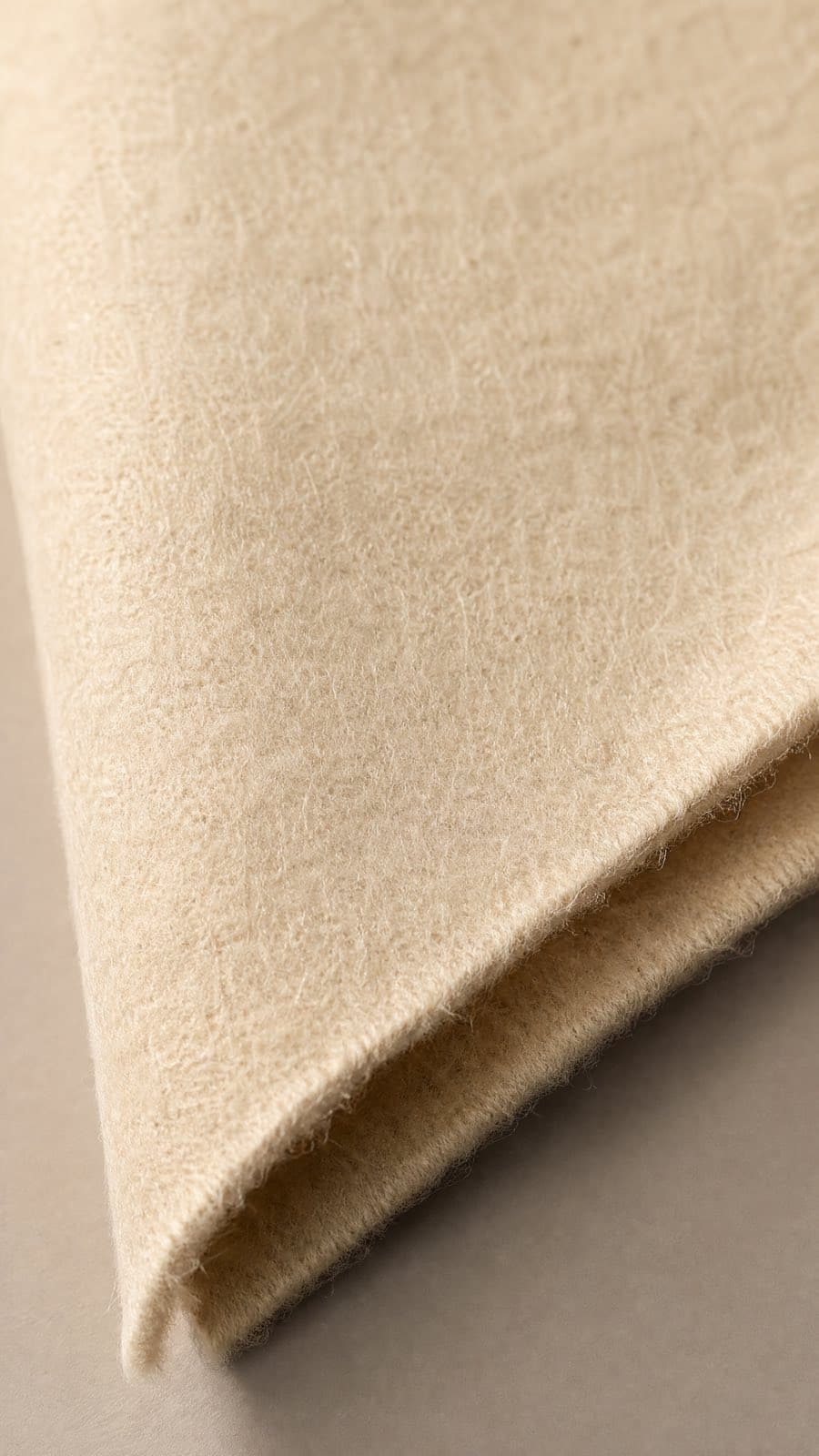
A folded length of soft, ivory cashmere leather.
Selection

The Hide

Every strap begins with a single hide, chosen for your watch.

Horween leather from the United States, calf from France and Italy, or one of fourteen exotic skins — alligator, lizard, ostrich, python. The grain is read, the best panel is marked, and the rest is set aside. Nothing is rushed at the start, because everything that follows depends on it.
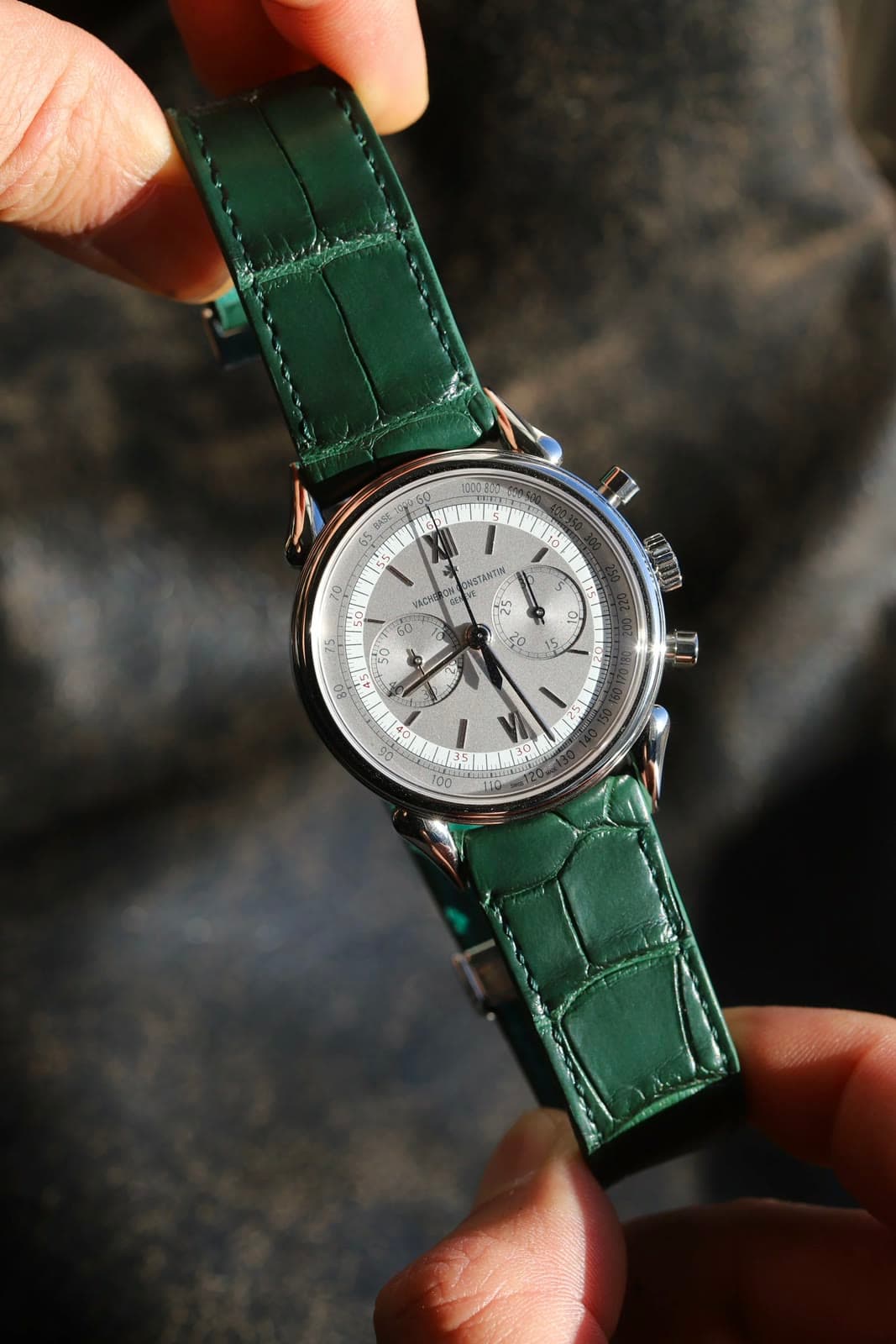
A green alligator strap on a Vacheron Constantin, held to the light.
Shaping

The Cut

Cut and curved by hand to your lug width and your wrist.

A paper template is drawn to your watch — lug width, taper, length, the curve that lets the strap fall to the wrist instead of standing off it. The blade follows the line once; there is no second pass. Padding, when you ask for it, is built up by hand so the profile is yours alone.

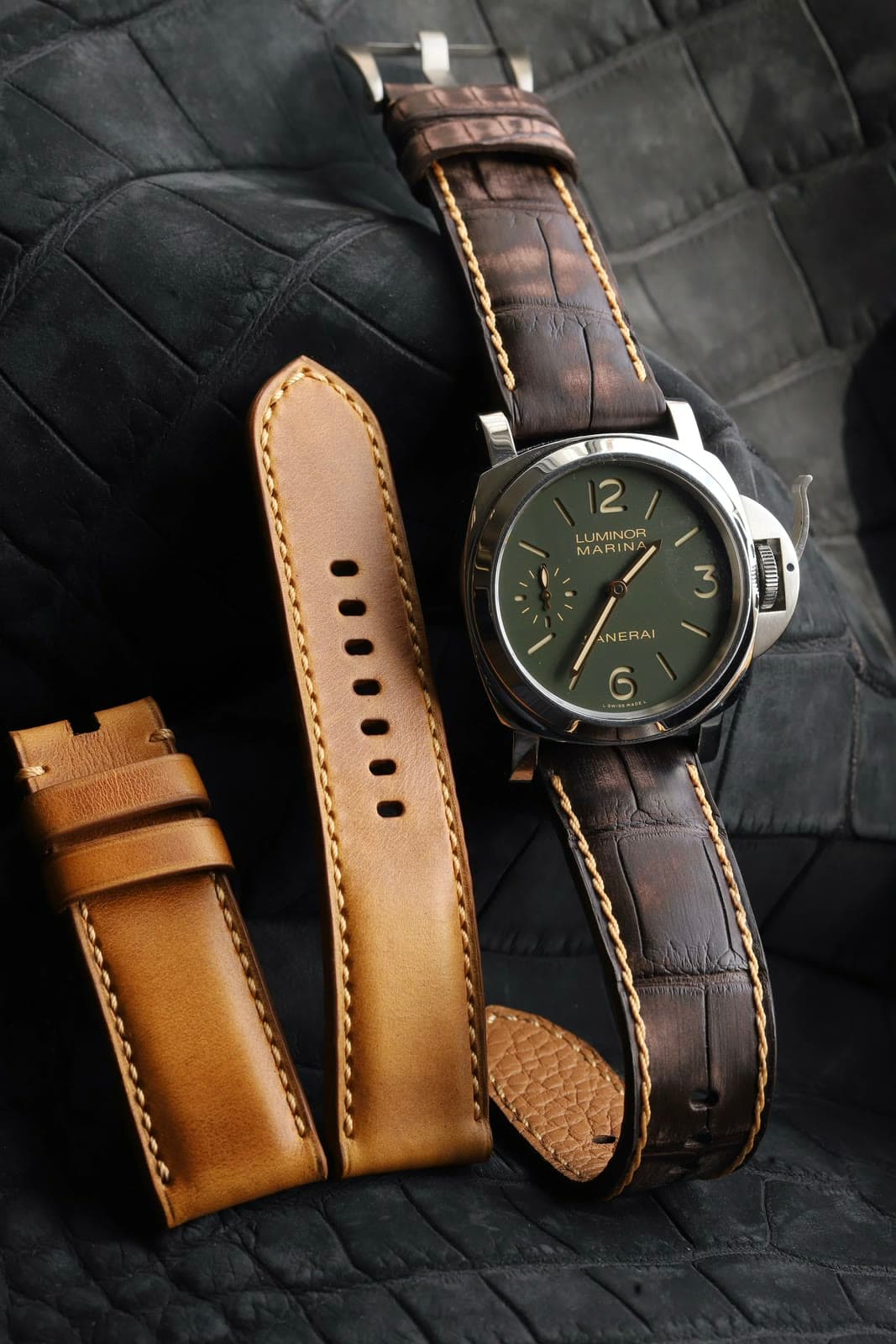
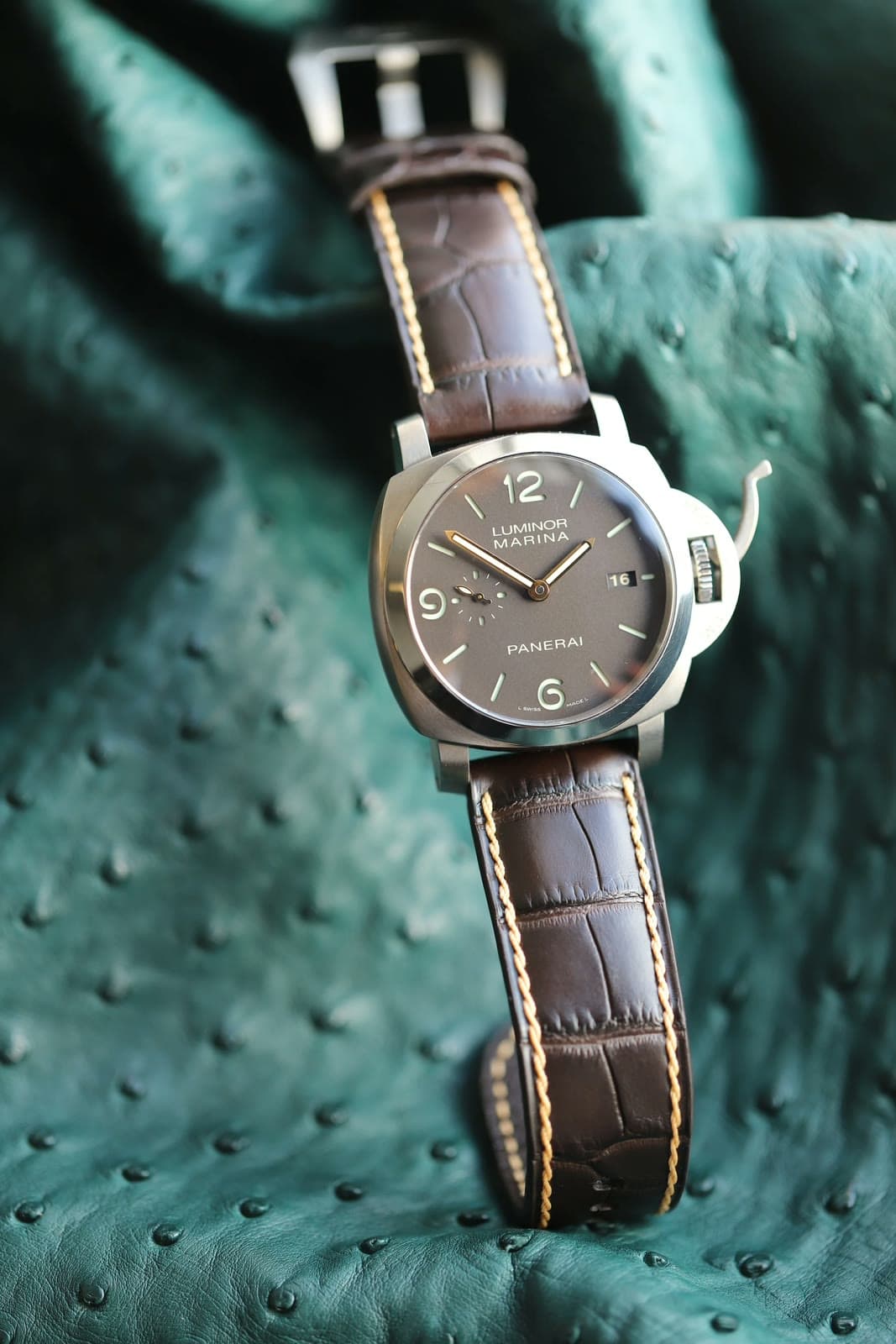
A Panerai on a brown alligator strap with cream contrast saddle-stitching.
Stitching

The Stitch

Saddle-stitched by hand — two needles, one seam, built to outlast the buckle.

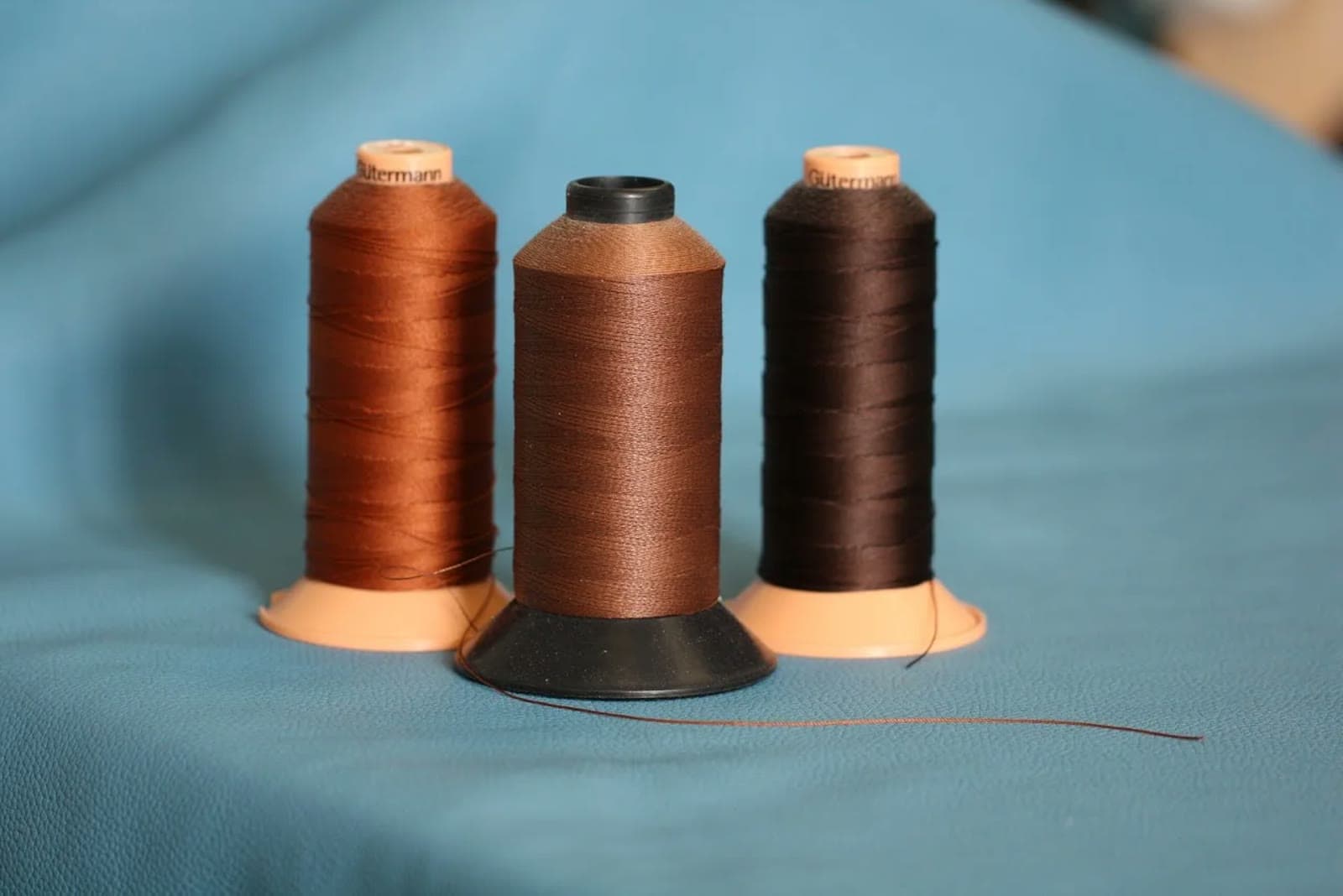
Each hole is pricked with an iron and sewn with two needles passing in opposite directions, locking every stitch on its own. It is slower than a machine and stronger by far: cut one stitch and the seam holds. Thread weight and colour are yours — thin or thick, tonal or a deliberate contrast.

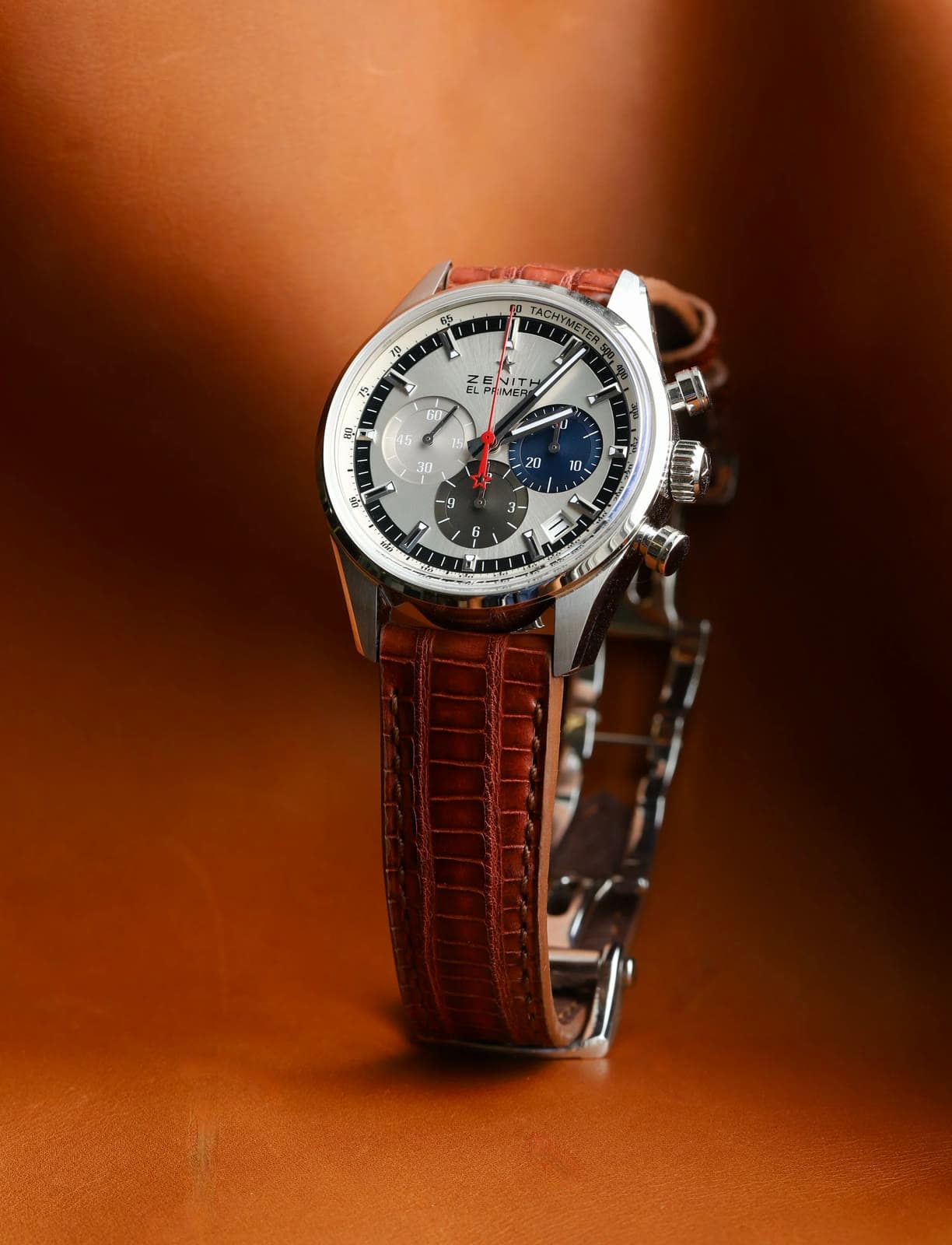
A Zenith El Primero on a brown alligator strap with cleanly burnished edges.
Finishing

The Edge

Beveled, inked and burnished until the edge turns to glass.

The raw edge is beveled, sanded through grits, sealed, and burnished with friction and wax until it is smooth and closed. It is the detail few notice and everyone feels — the difference between a strap that is made and one that is finished.

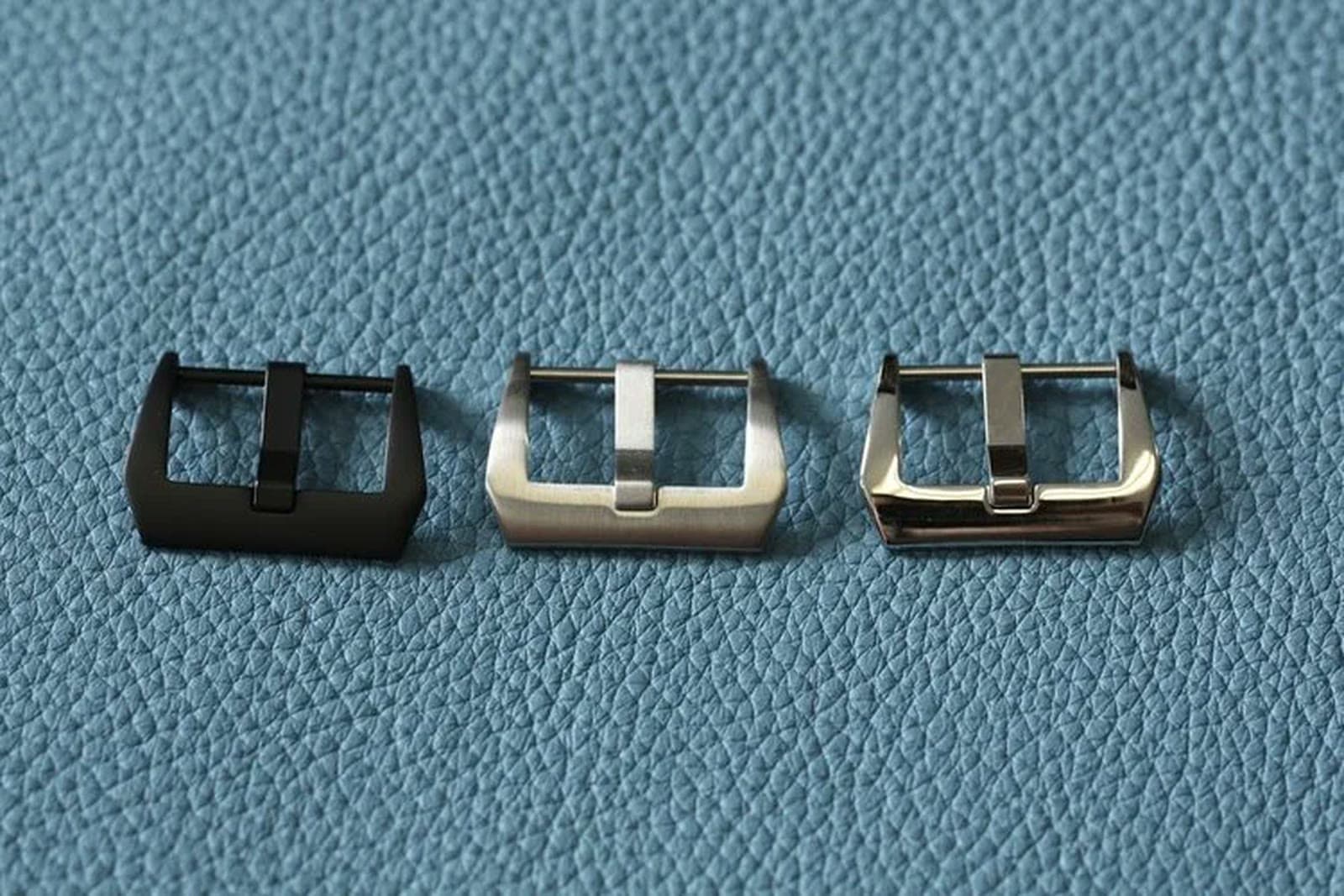
Three pin buckles — black, brushed, and polished steel — on leather.
Hardware

The Buckle

Fitted with the buckle or deployment clasp your watch deserves.

ARD, PRE-V, an IWC- or Omega-style pin buckle, a double-fold deployant, tubes for a Panerai — chosen to suit the watch and finished to match. The last decision, and the one your fingers meet every morning.

A strap should disappear on the wrist, and reveal itself only to the one who made it.
Aaron Pimentel